TXOGA Economic Insights
TXOGA's economic insights serve as a vital reference for our members as well as those who are interested in understanding data which tell the story of what’s happening with the economy as well as oil and gas markets at the Texas, U.S. and global levels.




Latest Blog
Consumer Prices Have Pulled Ahead—And That’s an Indicator Worth Watching
Dean Foreman, Ph.D., August 7, 2025
The June CPI report shows consumer prices rose 0.3% month-over-month, with the 12-month increase at 2.7%. Key drivers include:
Read More
- Shelter (+0.2% MoM; +3.8% YoY) — still the primary contributor to monthly inflation
- Energy (+0.9% MoM, led by gasoline +1.0%) — despite a 0.8% YoY decline
- Food (+0.3% MoM; +3.0% YoY) — with both food at home and away rising
- Core CPI (excluding food and energy) rose +0.2%, with gains in household furnishings, medical care, recreation, apparel, and personal care
July’s PPI increase was the largest in over three years, led by services, agriculture, and diesel.
Dean Foreman, Ph.D., August 15, 2025
July’s Producer Price Index rose 0.9% — the largest monthly gain since March 2022 — driven by higher service prices, sharp increases in certain food inputs, and notable gains in refined petroleum products shaped by global market dynamics.
Read More
- Services (+1.1% m/m) made up more than three-quarters of the overall rise, led by machinery and equipment wholesaling margins — a reminder that service-sector inflation can rival goods prices in its impact.
- Goods (+0.7% m/m) saw significant increases in fresh/dry vegetables (+38.9%), heating oil (+14.9%), and diesel (+11.8% in intermediate markets). Diesel and heating oil prices often respond more to refining capacity, product-specific inventories, and global trade flows than to crude oil prices alone.
- Unprocessed goods for intermediate demand posted large agricultural gains — turkeys (+23.6%), hay (+16.1%), and raw milk (+9.1%) — highlighting upstream cost pressures that could persist.
When Operating and Reported Earnings Diverge
Dean Foreman, Ph.D., August 15, 2025
For investors, few numbers matter more than earnings per share (EPS) — the profit a company makes, divided by the number of shares outstanding. EPS is a key driver of stock prices, and how markets interpret it tells us as much about confidence as it does about profits.
Read More
- Reported EPS, which includes all one-time gains and losses.
- Operating EPS, which strips out unusual items to show a company’s “core” performance.
- That’s the narrowest since Q1 2021 in the pandemic recovery, and outside that, the slimmest since Q2 2009 during the Great Financial Crisis.
- Historically, the gap has averaged 5% since 2017.
- Credibility restored: Energy companies were once infamous for wide earnings gaps, with reported numbers dragged down by write-offs during oil and gas price swings. Now, markets assume the numbers are clean and reliable.
- Confidence despite volatility: Even with price swings and shifting trade policies, the market does not anticipate major impairments. That reflects stronger balance sheets and more disciplined capital allocation.
- No big upside either: A tiny gap also signals markets aren’t expecting one-time windfalls. Investors see Energy earnings as steady, not spectacular.
- Different from Industrials: Unlike Industrials — which look steady because they usually have fewer accounting swings — Energy’s credibility is striking precisely because its history has been so volatile.
- Consumer Staples: Operating EPS projected 9% above reported EPS, more than double the historical average (22.7%). Likely explanation: tariff fears and higher costs dragging down reported results even as companies highlight “normalized” earnings.
- Communications: Operating EPS projected 1% below reported EPS, an inversion of history (normally +49%). Suggests unusual one-time gains (asset sales, accounting items) inflating reported earnings while core performance lags.
- Industrials: EPS gaps broadly in line with history, signaling steady reporting and fewer extraordinary adjustments.
- For Energy, a razor-thin gap is the clearest sign of maturity — credibility restored, volatility contained, but expectations flat.
- For Consumer Staples, wide gaps suggest caution: markets expect tariffs and costs to weigh more heavily on reported earnings.
- For Communications, the inversion is a warning flag that headline results may overstate true health.
- For Industrials, steadiness reflects business as usual.
ERCOT Spark Spreads: What They Reveal About Generator Profitability
August 19, 2025
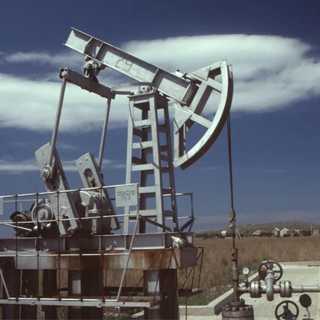
One of the clearest ways to understand electricity markets is by looking at spark spreads — the difference between the wholesale power price and the cost of natural gas to generate it. In simple terms, spark spreads are the “gross margin” for a gas-fired power plant.
Read More
- ERCOT North (Dallas–Fort Worth): $30.05/MWh
- PJM AD Hub (East Coast): $24.40/MWh
- ISO–New England (Boston): $22.30/MWh
- NYISO (Upstate New York): $24.90/MWh
- Energy-only design: ERCOT has no capacity market, so scarcity pricing during peak conditions drives higher energy margins.
- Load growth: Texas demand continues to climb 3–5% annually, led by population growth, industrial investment, and data centers.
- Fuel advantage: Texas hubs like Houston Ship Channel price gas lower than Northeast hubs, giving plants a cost edge.
- ERCOT West spark spread: $43.55/MWh — nearly 45% higher than ERCOT North, and more than double ISO-NE.
- Stranded gas: Permian Basin gas trades at just $1.69/MMBtu, compared with ~$3.30 at Houston and $4.40+ in New England.
- Transmission limits and wind swings: Congestion keeps much of West Texas wind from reaching cities. When wind drops, scarcity pricing takes hold — but local gas remains ultra-cheap.
- Result: West Texas gas plants are earning some of the widest gross margins in the entire U.S. power sector.
- Vistra reported $1.35 billion in Q2 2025 Adjusted EBITDA and reaffirmed full-year guidance of $5.5–$6.1 billion.
- Retail volumes are up 9% year-over-year, with business customers leading the growth.
- The company has repurchased over $5 billion in shares since 2021 and is targeting $300 million annually in dividends.
- In Austin, the message is: “We can’t secure firm gas, our plants don’t run enough, we need reforms or special treatment.”
- On Wall Street, the message is: “ERCOT is our strongest market, spark spreads are robust, and we’re delivering billions in EBITDA with room to grow.”
- ERCOT North margins outpace every Eastern grid — proving ERCOT remains generator-friendly.
- ERCOT West margins are the highest in the country — thanks to stranded Permian gas and ERCOT-wide pricing dynamics.
- Generators are profiting: Vistra’s results show billions in EBITDA, strong cash flows, and shareholder payouts underpinned by these spreads.
ERCOT: Where Competitive Generators Outperform Their Sector
When investors think of utilities, they usually picture stable but modest returns. The S&P 500 Utilities sector has averaged $4–$6 in quarterly earnings per share (EPS) over the past year — steady, but hardly spectacular next to the broader S&P 500’s $23–25 EPS.
Read More
- ERCOT North (Dallas–Fort Worth): $30.05/MWh
- ERCOT West (Permian Basin): $43.55/MWh
- Eastern grids (PJM, NYISO, ISO-NE): $22–25/MWh
- $1.35 billion in Adjusted EBITDA for the quarter, with full-year guidance of $5.5–$6.1 billion.
- With ~350 million shares, the market projects EPS above $8 in 2026.
- That’s nearly double the Utilities sector norm.
- Since 2021, Vistra has returned over $5 billion to shareholders through buybacks and dividends — extraordinary for a company often grouped with “utilities.”
- $1.12 billion in Adjusted EBITDA in Q2 2025; full-year guidance of $4.4–$4.8 billion.
- With ~230 million shares, Wall Street projects EPS above $8 in 2026, also well above sector averages.
- The company returned $600 million to shareholders in just the first half of 2025, including $400 million in buybacks.
- About 65% of its fleet is in ERCOT, where spark spreads and demand growth drive profits.
- In Austin, generators argue they can’t secure firm gas, their plants don’t run enough, and they need policy reforms to survive.
- On Wall Street, the same companies say ERCOT is their most profitable market, with spark spreads and cash flows strong enough to fuel billions in shareholder returns.
- EPS multiples higher than the Utilities sector average.
- Operating margins strong enough to support aggressive buybacks and dividends.
- Investor messaging that highlights ERCOT as their most profitable market.
Why Texas’ Intrastate Natural Gas Pipeline System Works — and Why a “Gas Desk” Misses the Mark
For more than a century, Texas has been the heart of America’s oil and natural gas industry. At the center of that leadership is our intrastate natural gas pipeline system — nimble, market-driven, and unmatched in its ability to connect producers with consumers here at home and around the world.
Read More
- Winterization standards now require both plants and gas facilities to prepare for extreme weather.
- Critical load designations keep gas infrastructure powered during emergencies.
- New coordination protocols align electricity and gas operators.
- Industrial consumers already pay for firm supply and storage because their operations can’t afford interruptions.
- On average since 2022, industrials have paid ~10–12 cents more per unit of gas than power generators because they make these commitments.
- Generators often choose not to, then argue the system should change to cover that choice.
- Industrials accept and pay for reliability because they need it.
- Generators want the benefits of cheap gas without paying for firm commitments.
- Proprietary contracts underpin investment; forced transparency undermines competition.
- Reforms since Uri already work — reliability has improved without new bureaucracy.
- Risk of creeping regulation — a gas desk could mimic federal-style oversight that has stalled pipeline growth elsewhere.
- In Austin, they say ERCOT is tough, unreliable, and unprofitable without reforms.
- On Wall Street, they call ERCOT their most profitable market, citing robust spark spreads and billions in shareholder returns.
- Enabling upstream growth — the intrastate model is why Texas dominates U.S. oil and gas.
- Honoring contracts — stability and property rights are the foundation of investment.
- Protecting ERCOT reliability — accountability belongs with generators, not a new layer of gas regulation.
Latest Reports












Read More
Texas Oil & Natural Gas Industry Makes History Again–New Record $27.3 Billion Paid in State and Local Taxes, State Royalties
Oil & Natural Gas Records Shattered: Highest-Ever Totals in Production, Pipelines, Storage, Processing, Refining, Exports, Tax Revenue
TXOGA President Todd Staples: “Texas oil and natural gas makes an outsized and unmatched contribution to the financial might of our state–and the energy leadership of our nation.”
TXOGA Annual Energy & Economic Impact Report Shows:
- Texas Oil and Natural Gas Industry Paid Record $27.3 Billion in State and Local Taxes and State Royalties in Fiscal Year 2024, Shattering Previous High by Almost $1 Billion
- Texas Independent School Districts Receive $2.92 Billion, Counties Received $1.03 Billion in Property Taxes from Oil and Natural Gas Production, Pipelines and Gas Utilities
AUSTIN – According to just-released data from the Texas Oil & Gas Association (TXOGA), the Texas oil and natural gas industry paid $27.3 billion in state and local taxes and state royalties in fiscal year (FY) 2024–the highest total in Texas history–shattering last year’s record by almost a billion dollars. TXOGA President Todd Staples today hosted a media briefing to share the Association’s annual Energy & Economic Impact Report and to provide an update on the industry’s global energy leadership, environmental progress, and its policy priorities for the 89th Texas Legislature.
Read the Report
“Remarkably, 2024 was yet another record-breaking year as the Texas oil and natural gas industry does its part to help reach Governor Abbott’s goal for our state’s economy to surpass France as the 7th largest economy in the world,” said Staples. “From tax revenues and production to pipelines, storage, processing, refining, and exports, Texas’ oil and natural gas industry has achieved record-breaking performance across every sector.”
“The oil and natural gas industry’s success in delivering for the Lone Star State–a success shared by every Texan–is the direct result of policy, partnerships and perseverance,” he said. “Texas leaders embrace policies that recognize oil and natural gas as an asset, not a liability. They view businesses as a partner, not an adversary. For its part, the industry has persevered through hostile federal policies of the outgoing Administration, global unrest and market volatility–including negative prices for natural gas–to shatter its own records, all while protecting and improving the environment.”
Staples observed that $27.3 billion in state and local tax revenue and state royalties from the Texas oil and natural gas industry translates to an extraordinary $74.8 million every day that pays for Texas’ public schools, universities, roads, first responders and other essential services. He noted that $27.3 billion is greater than 34 states’ entire tax revenues.
As in years’ past, public education received a major infusion of funds from oil and natural gas royalties in FY 2024. Ninety-nine percent of the state’s oil and natural gas royalties were deposited into the Permanent School Fund and the Permanent University Fund with those funds receiving $1.5 billion and $1.9 billion, respectively. At the end of FY 2024, the value of these two behemoth funds stood at $57.3 billion and $31.7 billion, respectively. The Texas Permanent School Fund is larger than Harvard’s endowment and is largest education endowment in the nation. The oil and natural gas industry is the only significant contributor of fresh investment capital to these critical Texas education funds.
Texas’ Rainy Day Fund, or Economic Stabilization Fund, has received over $33.9 billion dollars from oil and natural gas production taxes since its inception in 1987.
In FY 2024, Texas school districts received $2.92 billion dollars in property taxes from mineral properties producing oil and natural gas, pipelines, and gas utilities. Counties received an additional $1.03 billion dollars in these property taxes.
Pecos-Barstow-Toyah ISD in West Texas ranked #1 receiving $304.4 million in oil and natural gas property taxes. Reeves County ranked #1 with $110.1 million paid in oil and natural gas property taxes.
Since 2007, when TXOGA first started compiling this data, the Texas oil and natural gas industry has paid more than $257.6 billion in state and local taxes and state royalties, a figure that does not include the hundreds of billions of dollars in payroll for some of the highest paying jobs in the state, taxes paid on office buildings and personal property, and the enormous economic ripple effect that benefits other sectors of the economy.
In 2024, the industry employed more than 492,000 Texans who earned an average of $128,255 a year – 76% more than the average paid by the rest of Texas’ private sector. Conservatively, these jobs generate approximately two more jobs, with nearly 1.4 million total jobs supported across the Texas economy. Some economic analyses suggest that when all indirect and induced jobs are considered, the employment multiplier for the oil and natural gas industry could approach three additional jobs per direct job, bringing the total to over 2 million jobs supported by the industry across Texas.
“The Texas oil and natural gas industry’s unmatched, repeat economic performance and its associated impact do not happen by accident,” said Staples. “Non-stop industry innovation, investment and operational efficiencies shattered another string of records in 2024.”
Texas crude oil production set new records in 6 of the past 12 months, producing as much as 5.86 million barrels per day of crude oil in October 2024 – the highest total ever – and 44% of the nation’s total.
Most of that impressive growth is coming out of the Permian Basin, where innovation and efficiency are driving record production in the most important basin in the world. EIA estimates that new production per rig-month increased by 21% year-over-year as of October 2024.
New record-highs in natural gas marketed production occurred in 6 of the past 12 months, accounting for nearly 30% of U.S. production. Production exceeded last year’s record-breaking single-month high of 1.0 trillion cubic feet six times in 2024.
Texas also broke records for in-state crude oil supply, crude oil and condensate exports, and multiple refining outcomes. To transport these record oil and natural gas flows, Texas pipeline infrastructure expanded to 465,025 miles – up 13,000 miles from 2022-2023, according to the Railroad Commission.
“Texas-produced oil and natural gas, robust pipeline networks, export infrastructure and world-class refining reduce our dependence on other nations and help to keep prices down and our supply stable at home,” said Staples. “Abroad, our energy leadership is answering the call from the growing global economy, where oil and natural gas demand could reach consecutive record highs in 2025 and 2026. Clearly, the world needs more, not less, of reliable, responsibly produced oil and natural gas and Texas is leading the way.”
Staples noted the United States is not only the world’s number one producer of oil and natural gas – with Texas at the front – but the nation also leads the world in emissions reductions. “No one produces, transports, and refines oil and natural gas with the same commitment to safety and protecting the environment as American operators,” he said. “Industry-led initiatives like the Texas Methane & Flaring Coalition and The Environmental Partnership are dramatically reducing flaring and emissions and achieving environmental gains unseen anywhere else in the world.”
Between 2015 and 2022, methane emissions have dropped 42% in key production regions across the U.S., according to the EPA. According to a new analysis from S&P Global Commodity Insights, methane emissions from oil and natural gas production operations in the Permian Basin in 2023 decreased 26% from the previous year, equal to the total amount of carbon emissions avoided by every electric vehicle on the road in the United States that year.
In Texas, the flaring rate has dropped by 60% since June 2019 with a flaring rate of less than 0.94% in August, meaning more than 99% of natural gas produced in Texas was being beneficially used. Operators are working to eliminate routine flaring entirely by 2030, with many companies ahead of schedule.
Staples noted that investments in electrification of assets and carbon capture and storage opportunities will further reduce and manage emissions across the Lone Star State.
“Thanks to abundant natural resources, generational know-how and bold leadership, the Texas oil and natural gas industry plays a pivotal role in providing economic and energy security for our nation and stability for our allies around the globe,” he said. “We can never take that for granted. Policy, crafted in partnership with our state’s leaders, is key to continued success in Texas because we know policy can promote prosperity or hinder it.”
With an eye toward the 89th Texas Legislature that convenes on January 14th, Staples outlined the following policy priorities for the session:
Infrastructure: “To maintain our energy leadership in Texas, we need more infrastructure of all kinds – broadband, roads, pipelines, processing plants, LNG facilities, carbon capture and storage facilities – to send a signal that Texas is indeed open for business.”
Water: “We need to build upon the industry’s initiative and innovation in water recycling and reuse, with science-based, consensus-built policies and regulations related to produced water, more testing of technologies’ scalability and more infrastructure to safely move produced water.”
Electricity: “We are eager to see the positive impact of the voter-approved Texas Energy Fund and the Permian Basin Reliability Plan – bold initiatives designed to fortify the electricity grid, encourage investment in new dispatchable generation, and build transmission where Texans need it most.”
Taxes: “Like all Texans, the oil and natural gas industry recognizes the impact of rising property values, and the taxes levied on them, and we support Texas’ lawmakers and state leadership in their efforts to drive down property taxes for everyone. Broad-based relief is the most effective and beneficial to the economy.”
Staples concluded, “We look forward to working with our lawmakers to advance policy that promotes continued prosperity, security and progress for every Texan.”
Read More
Track Texas production trends with the same charts featured in TXOGA’s Weekly Chartbook.
Texas Oil and Natural Gas Industry Pays History-Making $26.3 Billion in State and Local Taxes, State Royalties
Texas Rewrites its Oil & Natural Gas Record Book: Highest-Ever Totals in Production, Exports, Refining Outcomes, Crude Oil Supply, Tax Revenue
TXOGA President Staples: “American Energy Leadership Starts in Texas”
TXOGA Annual Energy & Economic Impact Report Shows:
- Texas Oil and Natural Gas Industry Paid Record $26.3 Billion in State and Local Taxes, State Royalties in Fiscal Year 2023, Shattering Previous High by More than $1.5 Billion
- Industry Rewrote the Oil & Natural Gas Record Book in 2023 for Production, Exports, Refining, Crude Oil Supply, Tax Revenue
- Texas Independent School Districts Receiving $2.81 Billion, Counties Receiving $885.6 Million In Property Taxes From Oil And Natural Gas Production, Pipelines And Gas Utilities
AUSTIN – According to just-released data from the Texas Oil & Gas Association (TXOGA), the Texas oil and natural gas industry paid $26.3 billion in state and local taxes and state royalties in fiscal year (FY) 2023 – the highest total in Texas history – shattering last year’s record by more than $1.5 billion. TXOGA President Todd Staples today hosted a media briefing to share the Association’s Annual Energy & Economic Impact Report and to provide an update on the industry’s global energy leadership, environmental progress, and policy priorities.
“American energy leadership starts in Texas and our nation, our economy and our world are better because of the unparalleled stewardship of Texas oil and natural gas companies,” said Staples. “2023 was such a blockbuster year that the Texas oil and natural gas industry effectively rewrote its record book, clocking unmatched economic and energy achievements across the board.”
“Record-breaking performance of the Texas oil and natural gas industry amounts to much more than phenomenal statistical achievements. The natural resources, fuels and essential products produced here cement America’s energy security, fortify Texas’ economic strength and advance global stability at a time when our energy leadership has never been more crucial,” he said.
$26.3 billion in state and local tax revenue and royalties from the Texas oil and natural gas industry translates to an extraordinary $72 million every day that pays for Texas’ public schools, universities, roads, first responders and other essential services. Several sources of tax revenue from oil and natural gas surged in FY 23 including state and local sales taxes paid by the industry, which rose by $1.6 billion, an indicator of the industry’s ongoing investment in Texas. Property taxes paid by the oil and natural gas industry rose another $1.8 billion, as property values of oil and natural gas-bearing mineral properties more than doubled in a single year.
In 2023, 99 percent of the state’s oil and natural gas royalties were deposited into the Permanent School Fund and the Permanent University Fund, which support Texas public education. Each fund received $1.8 billion. Out of FY 2023’s production taxes paid, the Economic Stabilization (“Rainy Day”) Fund, or ESF, and the State Highway Fund (SHF) each received $3.3 billion. Since its inception in 1987, the Rainy Day Fund has received over $31.2 billion from oil and natural gas production taxes. All of these are funded almost exclusively with taxes and state royalties paid by the oil and natural gas industry.
In FY 2023, Texas school districts received $2.81 billion in property taxes from mineral properties producing oil and natural gas, pipelines, and gas utilities. Counties received an additional $885.6 million in these property taxes.
Pecos-Barstow-Toyah ISD in West Texas ranked #1 receiving $275.2 million in these property taxes. Reeves County ranked #1 with $98.9 million paid in oil and natural gas property taxes – more than double its total from fiscal year 2022.
Since 2007, when TXOGA first started compiling this data, the Texas oil and natural gas industry has paid more than $230.3 billion in state and local taxes and state royalties, a figure that does not include the hundreds of billions of dollars in payroll for some of the highest paying jobs in the state, taxes paid on office buildings and personal property, and the enormous economic ripple effect that benefits other sectors of the economy.
In 2023, the industry employed more than 480,000 Texans who earned an average of $124,000 a year – nearly twice the average paid by the rest of Texas’ private sector. Conservative estimates indicate that each of these jobs generates approximately two more jobs, with more than 1.4 million total jobs supported across the Texas economy. Some economists say this number could be as high as three more jobs supported and total over 2 million jobs in Texas.
“This type of unmatched, repeat economic performance does not happen by accident,” said Staples. “Success is the result of non-stop industry innovation, investment and operational efficiencies that shattered a string of oil and natural gas production, supply, refining and export records last year – all while achieving world-leading environmental progress.”
Texas hit production records in six of 12 months in 2023, producing as much as 5.6 million barrels per day of crude oil in October 2023 – more than 42% of the nation’s total and the highest monthly oil production total ever.
New record-highs in natural gas marketed production occurred in seven of 12 months in 2023, and in October eclipsed 1.0 trillion cubic feet in a single month for the first time ever, accounting for nearly 30% of the nation’s production.
Texas refineries set two new processing records in 2023: Texas refineries processed a record 5.6 million barrels of crude oil per day in July 2023. And as Texas produced and exported record amounts of natural gas liquids (NGLs) in 2023, refineries also utilized record amounts of NGLs.
Staples noted the United States is not only the world’s number one producer of oil and natural gas – with Texas at the front – but the nation also leads the world in emissions reductions. “No one produces, transports, and refines oil and natural gas with the same commitment to safety and protecting the environment as American producers. Industry-led initiatives like the Texas Methane & Flaring Coalition and The Environmental Partnership are dramatically reducing emissions and achieving environmental gains unseen anywhere else in the world.”
In addition to its economic impact for Texas, Staples described the Texas oil and natural gas industry’s contribution to global stability: “With so much uncertainty in the world, the need for reliable, responsibly produced energy from a stable trading partner has never been more crucial. Texas is that trade partner. Our producers, pipelines, refineries, and exporters answer the call to alleviate the global energy crisis, made worse by war.”
Staples noted Texas’ liquified natural gas (LNG) exports to Europe – 6.8 billion cubic feet per day in FY23 – more than doubled from 2.8 billion cubic feet per day (bcf/d) in 2021 – and subsequently reached a record-high 8.1 bcf/d in October 2023. “As a result, our allies are less dependent on hostile nations and their people benefit from the safety, security and opportunity made possible by reliable energy from Texas,” he said.
Staples asserted, “Growth like we’ve seen in Texas is not only unprecedented, it is not guaranteed. We cannot take for granted that this industry can continue to rewrite its record book in the face of federal policies blatantly designed to undermine progress. Delayed permits, canceled pipeline projects, closed and delayed federal leasing programs and incoherent regulations hurt American consumers and stifle our ability to deliver energy freedom and security around the world.
“At the state level, even as the #1 oil and natural gas state in the world’s leading energy nation, Texas has some challenges to address if we want to maintain position as a global energy leader.” Staples described Permian Basin producers’ need for infrastructure and more power generation as they electrify their operations. “No other major industry has to rely on temporary sources of electricity, like portable generators, for their electricity needs and neither some of the most prolific oil producers in the world,” he said.
“A growing Texas needs more pipelines and a cost-effective electrical power generation market that puts consumers’ needs first and incentivizes dispatchable power,” he said. “We must prioritize transparency and accountability as the foundation of our electrical grid to continue attracting jobs and investment here.”
Staples continued, “We need policy that allows Texas to lead the emerging carbon capture and storage industry (CCS). Manufacturers and companies of all varieties, including Texas oil and natural gas producers, pipeline, and refiners, are working to lower their emissions profile to meet customer demands. Texas must demonstrate a commitment to advance CCS because it benefits landowners and enables Texas businesses to remain competitive.”
Staples concluded, “We know that policy can promote prosperity or hinder it. We look forward to working with our lawmakers to ensure that the American energy leadership that starts in Texas, stays in Texas.”
Our estimates of oil and natural gas production—at both the state and county level—run months ahead of federal data, with a track record of accuracy within ±1%. You’ll also see dry gas estimates that lead official EIA figures by up to two years, built from TXOGA’s continuous monitoring of the natural gas value chain, as reflected in the Monthly Energy Economics Review. Compare TXOGA’s timely numbers with Railroad Commission data, which often take a year to fully report.
Read More
Texas Oil and Natural Gas Industry Paid Record $24.7 Billion in Taxes and State Royalties in Fiscal Year 2022, Shattering Previous High by 54%
Texas Independent School Districts received $1.65 billion, Counties received $608.6 million in property taxes from oil and natural gas production, pipelines and gas utilities
AUSTIN – According to just-released data from the Texas Oil & Gas Association (TXOGA), the Texas oil and natural gas industry paid $24.7 billion in state and local taxes and state royalties—by far the highest total in Texas history—shattering the previous record of just over $16 billion set in 2019 by 54%. TXOGA President Todd Staples today hosted a media briefing to share the Association’s Annual Energy & Economic Impact Report and to provide an update on the industry’s global energy leadership, environmental progress, and legislative priorities.
“The Texas oil and natural gas industry plays an extraordinary role in securing our state and national economy and advancing global stability. However, growth is not guaranteed, and policy can promote prosperity, or can hinder it,” Staples said. “Policies and politics in Texas and across our nation will determine if we can continue to deliver for Texans while meeting our nation and the world’s energy needs.”
$24.7 billion translates to roughly $67 million every day that pays for Texas’ public schools, universities, roads, first responders and other essential services. Production taxes and royalties to state funds more than doubled over fiscal year (FY) 2021. Production taxes grew by $5.8 billion, a 116% increase and royalties to state funds increased by $2.2 billion, a 102% increase. Oil and natural gas production taxes exceeded $10 billion for the first time in Texas history.
Staples detailed how oil and natural gas tax and royalty revenue is used to support education, transportation, healthcare and infrastructure, both locally in communities across Texas and through royalty and tax revenue that is paid into the Economic Stabilization Fund (commonly known as the Rainy Day Fund), the Permanent School Fund (PSF) and the Permanent University Fund (PUF)—all of which are funded almost exclusively with taxes and state royalties paid by the oil and natural gas industry.
In 2022, 99% of the state’s oil and natural gas royalties were deposited into the PSF and the PUF, which support Texas public education. Each fund received $2.1 billion—more than double the amounts from last year. The Rainy Day Fund received $1.5 billion from oil and natural gas production taxes. The value of these two funds now stand at an estimated $56.8 billion and $28.8 billion respectively.
In FY 2022, Texas school districts received $1.65 billion in property taxes from mineral properties producing oil and natural gas, pipelines, and gas utilities. Counties received $608.6 million in these property taxes.
Property tax totals for each county
Property tax totals for each ISD
Midland ISD in West Texas ranked #1 receiving $113.3 million from mineral properties producing oil and natural gas, pipelines, and gas utilities. Reeves County ranked #1 with $44.9 million paid in oil and natural gas property taxes.
Since 2007, when TXOGA first started compiling this data, the Texas oil and natural gas industry has paid more than $203.4 billion in state and local taxes and state royalties, a figure that does not include the hundreds of billions of dollars in payroll for some of the highest paying jobs in the state, taxes paid on office buildings and personal property, and the enormous economic ripple effect that benefits other sectors of the economy.
In 2022, the industry employed 443,000 Texans who earned an average $115,300 each—roughly 40% higher than the average pay in other private sectors. And for every direct job in the industry, conservative estimates indicate that an additional 2.2 indirect jobs are created. In total, 1.4 million Texans’ jobs ultimately derive from the state’s oil and natural gas industry.
In describing the industry’s continuing environmental progress, Staples said, “No nation is doing more to protect and improve the environment than the United States—with the oil and natural gas industry leading the way through investment in innovation. Through industry-led initiatives like the Texas Methane & Flaring Coalition and The Environmental Partnership, Texas oil and natural gas companies will continue to prioritize collaboration in developing solutions to achieve environmental progress while meeting the energy demands of today and the future.”
In addition to its economic impact for Texas, Staples described the industry’s contribution to global stability. “The world understands energy security is a necessity, not a luxury, as many around the globe are struggling to access reliable, affordable, and secure energy,” he said. “Our allies are literally knocking at our door in energy need and Texas’ oil and natural gas producers, pipelines, refiners and exporters are playing an essential role in delivering energy stability to our trade partners, even in times of continued global unrest.”
In describing TXOGA’s priorities for the 88th Legislative Session, Staples said, “A bright future is Texas’ to lose. We can continue to outpace other states and even countries with economic opportunity, job growth and capital investment or we can forfeit the game by sitting some of our best players on the sidelines.”
“For example, economic development policy to keep Texas competitive is a must,” he said. “We also need a policy framework that allows Texas to lead in carbon capture and sequestration, electricity market redesign policy that keeps the grid reliable and rates affordable, policies to fund our key regulatory agencies and protection against policy that would adversely impact this industry’s contributions to a cleaner, strong, better future. We look forward to working with our lawmakers as they embrace opportunities to advance our state’s energy leadership, strengthen communities and grow local economies.”
Latest Data
Track Texas production trends with the same charts featured in TXOGA’s Weekly Chartbook. Our estimates of oil and natural gas production—at both the state and county level—run months ahead of federal data, with a track record of accuracy within ±1%. You’ll also see dry gas estimates that lead official EIA figures by up to two years, built from TXOGA’s continuous monitoring of the natural gas value chain, as reflected in the Monthly Energy Economics Review. Compare TXOGA’s timely numbers with Railroad Commission data, which often take a year to fully report.
From the Permian Basin to the Eagle Ford and beyond, explore Texas’ major producing regions. Built from county-level data aligned with U.S. Energy Information Administration definitions, TXOGA’s estimates show the mix of oil and natural gas production in each area. Create custom totals for one or more regions, compare oil-to-gas ratios, and see how our up-to-date estimates stack up against the latest Railroad Commission reports.
As one of the world’s most prolific producing regions, the Permian Basin spans both Texas and New Mexico. TXOGA provides detailed county-level estimates for each side of the basin, meeting frequent media and stakeholder needs. Zoom into oil and natural gas production by state, and see how Texas and total Permian volumes compare to U.S. production—offering a timely look at the region’s outsized role in national supply.
Get a district-by-district view of the oil and natural gas industry’s footprint in Texas. For every House and Senate district, you’ll find production and well counts, plus the industry’s economic impact—jobs, wages, GDP, and value. Data come from geocoded Texas Railroad Commission records and are modeled from county-level Bureau of Economic Analysis and Texas Workforce Commission data.